
A title search establishes the legal ownership of the property. It also identifies any claims or liens. A clear title ensures smooth property transactions. Individuals can perform title search on their own but complex cases may require expertise.
Contents
Buying a property involves multiple things like finalizing a location of your choice, budget, amenities and many more. Now that you have found one that fits your budget, has good amenities and location, you may feel happy. But that happiness may be short-lived if there are flaws in property ownership.
For a smooth and quick transaction, the title must be clear. The papers must be clear before the property can be transferred in your name and you become the legal owner. Any pending property tax, liens or unreleased mortgage may complicate and delay the transaction process.
Doing a due diligence of property title is important. A 2024 study by the American Land Title Association (ALTA) found that 36% of real estate transactions required extensive, non-routine title clearance efforts. It is better to take up title search as the first step before one moves to the transaction process.
A real estate title search reviews public records to establish the ownership history. It identifies recorded claims, liens, encumbrances, or other issues that may affect the title. But it is not a simple process, and multiple records must be accessed and interpreted.
This article will discuss in detail title search and explain the steps involved in title search process. You will also learn about the timeline and challenges involved in conducting one independently. It also looks at when professional title search services may be useful.
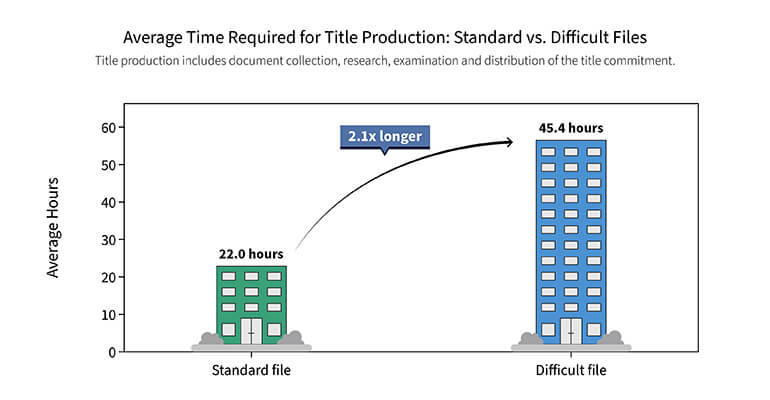
Image Source: 240506-ALTA-Title-Insurance-Curative-Work-Study-Report.pdf
The Need For Title Search
Title search is done to confirm the legal owners of the property and also to ensure that the seller has a right to transfer ownership. Delays in real estate closings often trace back to title issues.
A well-documented title search process reviews public records, reveals liens, unpaid taxes, easements, ownership gaps and other title issues. The issues must be resolved before the transaction proceeds.
Mortgage lenders will typically ask for a professional title search before closing any deal. In fact, buyers may also consider owner’s title insurance for protection against undiscovered title problems.
How to do a title search: step-by-step process
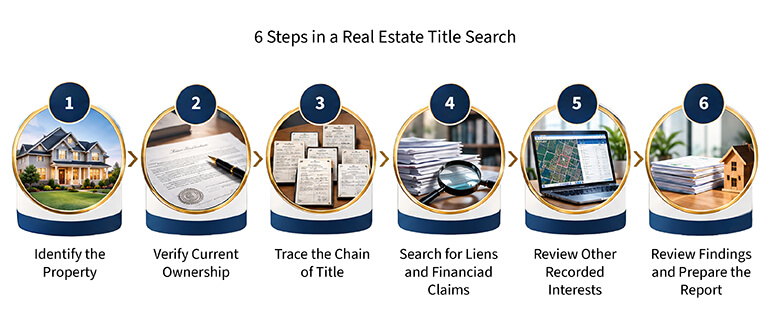
A title search doesn’t involve just verifying the name of the property owner. The process involves reviewing public records, chain of ownership, liens, encumbrances, any errors in public records and much more. The process may vary by jurisdiction but broadly title search follows the following steps:
Step 1: Identify the property
Identifying the correct property address is an important first step for title search. The property address provides a starting point for locating the relevant records, but an address alone may not be sufficient to establish the property’s legal identity. It therefore needs to be verified against other property identifiers.
Use the complete street address including street number, unit number and other relevant data to start locating the property. Look for APN or parcel ID used by that jurisdiction for a more precise property identifier. Verify the legal description of the property that identifies the land legally. Identify the correct recording jurisdiction as searching the wrong office can miss the records. And most importantly cross check the identifiers to ensure that the subsequent title search is being conducted against the correct property
Data extraction tools and automated workflows can support retrieving records from digital databases, but cannot guarantee the accuracy of the data. You will still need to verify whether the records relate to the right property.
Step 2: Verify current ownership
Now that we have identified the correct property, the next step is to check the public records to establish the current ownership. The recent transfer document or the latest deed could be the next starting point. However, finding the latest deed cannot establish that the title is clear. Earlier records need further examination.
Locate the most recent deed recorded for the property identified. Determine who transferred the property interest and who received it. Understand how the ownership interest was transferred; sale, inheritance, trustee’s deed etc. and don’t forget to check ownership details
So, you have the most recent recorded transfer, but you still need the complete ownership history. Earlier recorded transfer also needs to be examined to ensure the ownership history was consistent and there were no questionable transfers.
Step 3: Trace the chain of title
The chronological history of recorded ownership transfers should be clear with no ambiguity. Once you start moving backward each transfer should connect logically with the preceding one. Any gaps in the recorded ownership history need to be flagged.
Work backward from the latest deed. Check whether the grantee in an earlier transfer subsequently appears as the grantor when the property is transferred again. Review names and ownership interests. Check the consistency of property identifiers across successive deeds and flag any inconsistencies, unexplained ownership changes or irregularities.
Data extraction tools and digitized historical records make earlier deeds easier to retrieve. AI/data matching tools help identify name variations, missing links or inconsistencies for review. But again, automated match may not ensure that the chain is legally sound. Further evaluation may be needed to check unusual transfers and ambiguities.
Step 4: Search for liens and financial claims
Establishing the ownership chain is not enough to clear the title. There are liens and financial claims that need further investigation. There could be financial issues that may affect the title or transaction. The issues will need clearance as per the rules of the jurisdiction.
Look for recorded mortgages or deeds of trust. Search for recorded federal, state or local tax liens that may affect the property/title. Check relevant court/public records for judgments that may attach to the owner’s real property. Look for liens arising from unpaid work, labor or materials supplied for the property and verify lien status
Digital record systems allow searches across recorder, tax and sometimes court sources while automation can help retrieve and organize lien-related documents. Extraction and matching tools can capture data and help associate liens and subsequent releases.
Human review remains important where records contain ambiguities or require interpretation.
Step 5: Check other encumbrances and relevant records
So far, we have covered financial matters but there may be issues related to non-financial matters as well that may affect ownership. Properties even with clear ownership can be subjected to restrictions. It could involve how the property is used or transferred.
Based on the jurisdiction and property certain records must be checked. Check easements where rights are recorded allowing another party to use part of the property. Look for recorded covenants, conditions or restrictions limiting the use of property. Also examine inconsistencies in legal descriptions that may need further investigations.
Examination of additional records that may affect ownership is important. Check for leases, rights of first refusal or any other recorded interests.
Digital databases can make your task much easier but determining how an easement, restriction or document affects title will always require title expertise.
Step 6: Review findings and prepare the title report
Once you have collected all the relevant records, collect them all at one place for the final review. The review cannot happen in isolation. Isolated documents will not give you a clear picture on title.
Records need to be cross-checked, compared and verified. Issues have to be identified, and findings organized in title report. The report identifies the findings and issues that may require further review or resolution.
What Does A Title Search Reveal?
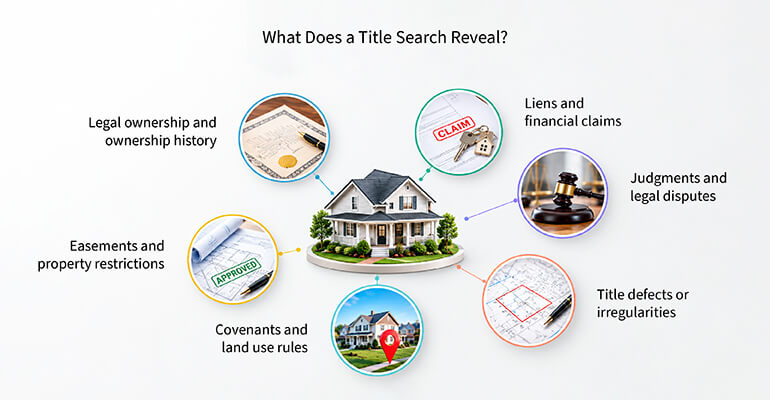
A title search gives clarity on property’s legal ownership and matters that may affect the title. Based on your scope of search and jurisdiction, the final report will list issues that may need resolution before a transaction proceeds.
A title search broadly reveals the entire ownership history along with liens and mortgages. It gives you the name of the current owner and previous recorded transfers as well. It also flags easements, restrictions that may be recorded.
Title irregularities, gaps in ownership chain, inconsistent names or legal descriptions. Conflicting records and any such irregularity that can affect the title clearance is revealed by the title search.
How Long Does A Title Search Take?
There can be no standard time fixed for title search. The time would depend on the complexity of ownership records, property, jurisdiction and availability of records.
If the search is straightforward and the records are available digitally, the title search can be done faster compared to a complex one.
There are multiple factors that can affect the timeline of title search process. Most important being the complexity of ownership history; inherited properties, disputed lands, will take a little longer time.
Again, commercial or rural land parcels require more time compared to individually owned land. Also, for a very old property sometimes digital records are not available, and handwritten records often take more time.
And if the property has multiple title defects like unpaid taxes, liens, bankruptcy filings that demands extra investigative and curative work
Can You Do A Title Search Yourself?
Yes, one can do title search as in many jurisdictions’ property records are publicly available. One can easily get access to records through register of deeds, assessor, tax and court databases. But if you cannot interpret the records, it is of no use.
Retrieving the records if they are digitized is simpler and you can do it easily. You can start with identifying the correct property jurisdiction and trace available public record databases.
Search for liens, releases, easements and other recorded matters and cross-check names, dates, legal descriptions and document references.
But it may not be as simple as it looks. Collecting records spread across different databases could be a challenge. According to PRIA, the U.S. has approximately 3,600 recording jurisdictions, with indexing practices and requirements varying across jurisdictions.
Since practices differ across jurisdictions, the researcher should understand the jurisdiction system.
And if the property is very old the records may not be digitized. Similar names and name variations can also complicate searches and require additional cross-checking.
Just locating the record could be simple but identifying potential title issue could pose a problem for a layman.
When Should You Use A Professional Title Search Service?
DIY is a good option as public records are accessible but at the same time the complexity of the title could require the help of experts.
Situations like long or complex ownership history, gaps, liens, encumbrances, records across multiple sources or high volume searches may require the help of professionals.
The expertise does not only help in retrieving the records, but they also examine, cross-check, verify and report issues to be resolved. Professionals also have access to tools and technology that help retrieve, organize and cross-check large volumes of property records efficiently.
Role Of Technology In The Title Search Process
Technology plays a crucial role in the title search process by making it easier and quicker. Automated workflows can speed up searches across available property and public-record sources. Document processing gets faster with OCR/data extraction tools. These tools can extract names, parcel numbers, legal descriptions, recording dates and other relevant fields from documents.
Matching and validation tools help compare records, identify name variations, connect related documents and flag inconsistencies or missing information.
But despite the technology that can assist the process, human review is still needed. Unusual transfers, ambiguous records and the legal significance of title issues still require appropriate expertise and judgment.
Conclusion
A title search is not only about locating the owner’s name or retrieving a deed. The records have to be examined to understand ownership and matters affecting title. Public access and technology have made records easier to search, but record availability, jurisdictional differences and interpretation still create complexity. DIY may work for straightforward research, while complex or high-volume searches can benefit from professional expertise.
Need support with complex or high-volume title searches?
Talk to our experts »

Jatin Patel is a Senior Manager with over 23 years of expertise in real estate documentation and legal publishing. He specializes in scaling major client accounts and driving operational excellence through strategic business transformation. By leveraging automation and deep domain knowledge, Jatin optimizes processes to enhance accuracy and efficiency. He is recognized for delivering measurable outcomes through technology adoption and a client-centric approach to execution. 🔗Connect with Jatin on LinkedIn