

In today’s business scenario, data is the ultimate power. From product research, planning and sales to marketing, you can genuinely deliver a better experience to your customers- if you have deployed the right methods to collect data.
Contents
- Role of data collection in market research
- Role of data collection in success of marketing campaigns
- Challenges and considerations in data collection
- Strategies for overcoming challenges and considerations
- Choosing the right data collection methods
- Building a culture of data-driven decision making from market research to marketing
- Conclusion
Data collection is a powerful tool for market research, enabling businesses to gain valuable insights and drive marketing success. As per Statista in 2021, $52 billion worth of marketing data was used globally.
By understanding the purpose, benefits, and types of data collected, as well as the methods and tools used, businesses can harness the power of data collection to achieve marketing success and maintain a competitive edge in the market.
Role of data collection in market research
Purpose of data collection in market research
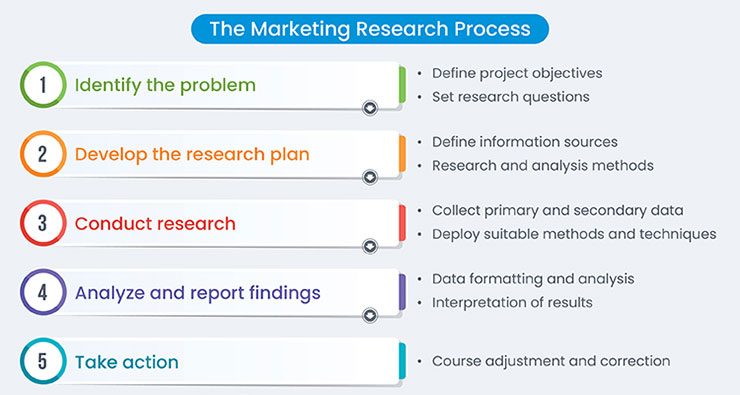
The primary purpose of data collection in market research is to gather information about target markets, customers, competitors, and industry trends. This information enables businesses to:
- Understand customer needs and preferences
- Identify market opportunities and threats
- Develop effective marketing strategies
- Monitor and evaluate marketing performance
Benefits of data collection in market research
Data collection in market research offers several benefits, including:
- Informed decision-making: High-quality data enables businesses to make better-informed decisions, leading to more effective marketing strategies and improved results.
- Competitive advantage: Understanding market trends and customer preferences allows businesses to stay ahead of the competition and capitalize on emerging opportunities.
- Risk mitigation: Data collection helps businesses identify potential risks and develop strategies to address them, reducing the likelihood of costly mistakes.
Types of data collected in market research
Market research typically involves collecting two types of data:
- Quantitative data: Numerical data that can be measured and analyzed statistically, such as sales figures, market size, and customer demographics.
- Qualitative data: non-numerical data that provides insights into customer opinions, motivations, and preferences, such as customer feedback, reviews, and interview responses.
How is data collected for market research
Various methods and tools are used to collect data for market research, like:
- Surveys and questionnaires: Structured questionnaires administered to a sample of respondents, either online, in-person, or via phone, to gather quantitative and qualitative data.
- Interviews and focus groups: In-depth, one-on-one interviews or group discussions used to gather qualitative data and explore customer opinions, experiences, and motivations.
- Observational research: The systematic observation and recording of customer behavior, interactions, or environmental factors to gather qualitative data.
- Social media monitoring: Tracking and analyzing social media conversations, mentions, and trends to gather insights into customer opinions, preferences, and sentiment.
Like for example, most famous brands like Starbucks, Apple, and LEGO depend on market research. Here’s how:
- Starbucks tracks cultural trends, monitors social media, gathers customer feedback and in-store product testing by obtaining consumer feedback through its My Starbucks Idea platform.
- Apple hugely depends on market research to understand its consumers’ needs. Through Apple Customer Pulse, they conduct extensive customer satisfaction surveys.
- Over the years, LEGO has been primarily a boy-oriented toy company. Recently, they conducted a study for 3500 girls and their mothers to expand into a new market. LEGO used market research to determine the use of bright colors for its packaging and figurines’ size.
People also read: Top 5 data collection outsourcing companies in India
Role of data collection in success of marketing campaigns
Purpose of data collection in execution of marketing campaigns
The primary purpose of data collection in marketing is to gather information that can be used to:
- Identify target audiences and understand their needs, preferences, and behaviors
- Develop and refine marketing messages and communication channels
- Monitor and evaluate the effectiveness of marketing campaigns
- Optimize marketing strategies based on data-driven insights
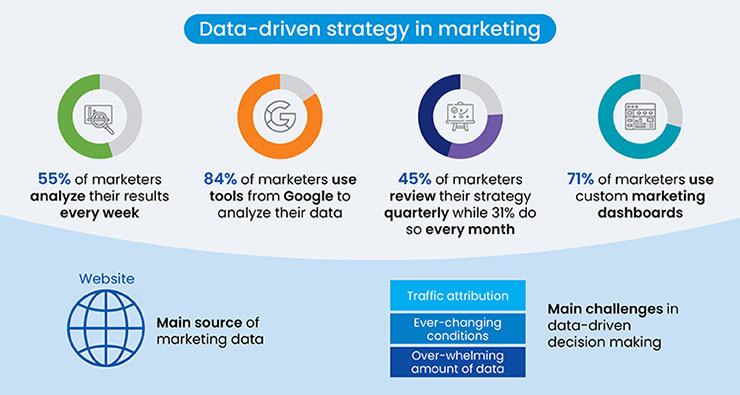
Data collection plays a crucial role in the success of marketing campaigns by:
- Informing marketing strategies: High-quality data enables businesses to develop effective marketing strategies based on consumer preferences, behavior, and market trends.
- Measuring campaign performance: Data collection allows businesses to track and evaluate the success of their marketing campaigns, enabling them to optimize strategies and improve results.
- Facilitating personalization and customization: Data-driven insights help businesses tailor their marketing messages and offers to individual customers, enhancing engagement and conversion rates.
Benefits of data collection for marketing
Data collection offers several benefits for marketing, including:
- Target audience analysis: Data collection helps businesses identify and understand their target audiences, enabling them to develop targeted marketing strategies.
- Consumer behavior understanding: Data-driven insights into consumer behavior can inform marketing tactics and help businesses better meet customer needs and preferences.
- Personalization and customization: Data collection enables businesses to create personalized marketing strategies that resonate with individual customers, leading to increased engagement and conversion rates.
- Effective messaging and communication: Data-driven insights can help businesses craft compelling marketing messages and select the most effective communication channels for their target audiences.
Techniques Used for Analyzing and Interpreting Data for Marketing analytics and visualization
Several techniques are used to analyze and interpret data for marketing purposes, including:
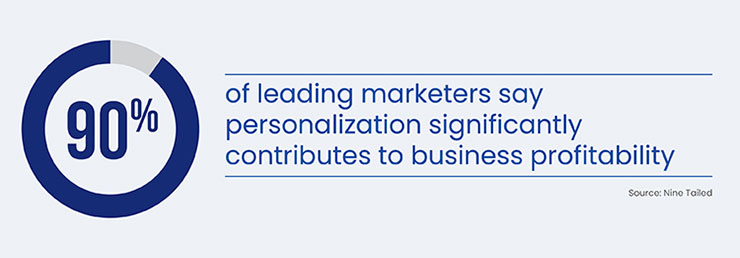
- Data analytics and visualization: Analyzing and visualizing data can help businesses identify patterns, trends, and insights that inform marketing strategies.
- Segmentation and targeting: Data analysis can be used to segment customers based on demographics, behavior, or preferences, enabling businesses to target specific groups with tailored marketing messages.
- A/B testing experimentation: A/B testing allows businesses to compare the performance of different marketing tactics, helping them optimize strategies based on data-driven insights.
- Predictive modeling and forecasting: Predictive modeling and forecasting techniques can help businesses anticipate future trends and customer behaviors, enabling them to develop proactive marketing strategies.
Data collection is a powerful tool that can drive marketing success by informing strategies, enabling personalization, and facilitating data-driven decision-making. By leveraging data collection and analysis techniques, businesses can create more effective marketing campaigns, better understand their target audiences, and ultimately achieve greater success in the market.
For example, Kellogg’s has achieved remarkable success in recent years by leveraging data to create personalized and innovative branded advertising campaigns. The company meticulously analyzes data from multiple sources, including its Family Rewards program, which boasts over 33 million American members.
Additionally, Kellogg’s examines data from its e-commerce platforms, tracking user behavior such as browsing patterns and time spent on specific products. This data-driven approach enables Kellogg’s to engage consumers effectively and tailor its marketing strategies for maximum impact.
Challenges and considerations in data collection
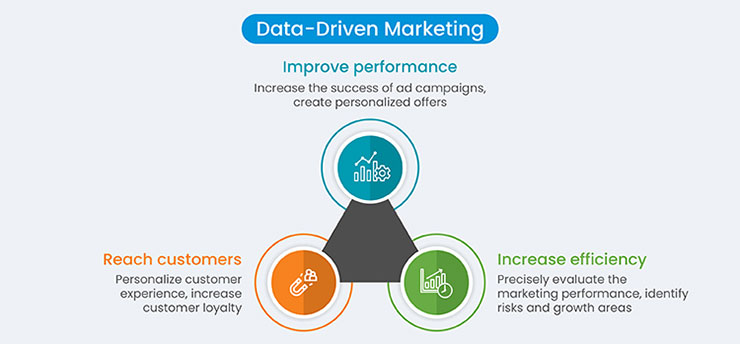
- Data quality: Ensuring the accuracy, completeness, and consistency of collected data is crucial for reliable insights and decision-making. Businesses must implement data validation and cleansing processes to maintain high-quality data.
- Data privacy and security: With increasing concerns about data privacy and the rise of data protection regulations, businesses must ensure that they collect, store, and process data in compliance with applicable laws and ethical guidelines. This includes obtaining proper consent from data subjects and implementing robust data security measures.
- Data representativeness: To draw meaningful conclusions from collected data, companies must ensure that their data is representative of the target population. This involves selecting appropriate sampling methods and considering potential biases in data collection.
- Data integration: Businesses often collect data from various sources, which may have different formats and structures. Integrating and harmonizing this data can be challenging but is essential for comprehensive analysis and insights.
- Resource constraints: Data collection can be time-consuming and resource intensive. Businesses must allocate sufficient resources, including budget and personnel, to ensure effective data collection and management.
Strategies for overcoming challenges and considerations
- Implement data quality best practices: Establish data quality standards and processes, such as data validation, cleansing, and monitoring, to maintain high-quality data.
- Adhere to data privacy and security guidelines: Develop and implement data privacy and security policies, obtain proper consent from data subjects, and invest in robust data security measures to protect collected data.
- Ensure data representativeness: Select appropriate sampling methods and consider potential biases in data collection to ensure that your data is representative of the target population.
- Leverage data integration tools: Utilize data integration tools and platforms to harmonize data from various sources, enabling comprehensive analysis and insights.
- Allocate sufficient resources: Plan and allocate adequate resources, including budget and personnel, for data collection and management to ensure the success of your marketing campaigns.
Fine-tune your data collection. Create a strong foundation for effective market research.
Get in touch »Choosing the right data collection methods
Overview of primary and secondary data sources
- Primary data sources: Primary data is collected directly from the source, such as through surveys, interviews, or observations. This type of data is tailored to specific research objectives and provides unique insights into customer behavior, preferences, and opinions.
- Secondary data sources: Secondary data is obtained from existing sources, such as published reports, articles, or databases. This type of data can provide valuable context and background information for market research but may not be as specific or up to date as primary data.
Selecting appropriate data collection methods based on research objectives
To choose the right data collection methods, consider the following factors:
- Research objectives: Determine the specific information you need to achieve your research goals and select data collection methods that can provide this information.
- Time and resources: Consider the time and resources available for data collection and choose methods that are feasible within these constraints.
- Data quality and reliability: Select data collection methods that ensure the accuracy, completeness, and consistency of the data.
Commonly used data collection techniques
- Surveys and questionnaires: Structured questionnaires administered to a sample of respondents to gather quantitative and qualitative data.
- Interviews and focus groups: In-depth, one-on-one interviews or group discussions used to gather qualitative data and explore customer opinions, experiences, and motivations.
- Observational research: The systematic observation and recording of customer behavior, interactions, or environmental factors to gather qualitative data.
Analyzing and interpreting collected data
Once data is collected, it must be analyzed and interpreted to extract actionable insights. This process involves:
- Organizing and cleaning data for analysis: Prepare the data for analysis by organizing it into structured format and cleaning it to ensure accuracy and consistency.
- Utilizing statistical techniques for data analysis: Apply statistical techniques, such as descriptive statistics, inferential statistics, or regression analysis, to analyze the data and identify patterns, trends, and relationships.
- Data visualization for effective interpretation: Use data visualization tools, such as charts, graphs, or heatmaps, to present the data in a visually appealing and easily understandable format.
- Extracting actionable insights from research findings: Interpret the data analysis results and extract actionable insights that can inform marketing strategies and decision-making.
Building a culture of data-driven decision making from market research to marketing
To fully harness the power of data collection, businesses must build a culture of data-driven decision-making that spans from market research to marketing execution.
Creating a data-driven mindset within the organization
To foster a data-driven culture, businesses should:
- Encourage employees to base decisions on data and evidence, rather than intuition or assumptions.
- Provide training and resources to help employees develop data literacy and analytical skills.
- Recognize and reward data-driven decision-making and continuous learning.
Investing in data infrastructure and analytics capabilities
To support data-driven decision-making, businesses must invest in:
- Robust data infrastructure that enables efficient data collection, storage, and management.
- Advanced analytics tools and platforms that facilitate data analysis and visualization.
- Skilled data professionals, such as data analysts, data scientists, and data engineers.
Promoting collaboration between marketing and research teams
Effective data-driven marketing requires collaboration between marketing and research teams. To promote collaboration:
- Establish clear communication channels and processes for sharing data and insights.
- Encourage cross-functional teamwork and joint problem-solving.
- Align research objectives with marketing goals and strategies.
Encouraging continuous learning and adaptation based on data insights
A data-driven culture thrives on continuous learning and adaptation. Businesses should:
- Regularly review and evaluate marketing strategies and tactics based on data insights.
- Encourage experimentation and testing to identify optimal marketing approaches.
- Foster a culture of learning from both successes and failures.
Leveraging data insights for competitive advantage:
- Understanding target market and consumer preferences: Data-driven insights help businesses better understand their target market and tailor marketing strategies to meet customer needs and preferences.
- Identifying market gaps and untapped opportunities: Data analysis can reveal market gaps and untapped opportunities, enabling businesses to develop innovative products, services, and marketing campaigns.
- Monitoring competitor strategies and benchmarking performance: Data-driven market research allows businesses to monitor competitor strategies, benchmark their performance, and identify areas for improvement.
- Developing tailored marketing campaigns and messaging: Data insights enable businesses to create personalized marketing campaigns and messaging that resonate with their target audience, leading to increased engagement and conversion rates.
- Optimizing pricing, product development and marketing strategies: Data-driven insights can also be leveraged to optimize various aspects of a business’s marketing mix:
- Pricing: Data analysis can help businesses identify the optimal pricing strategy for their products or services, taking into account factors such as customer price sensitivity, competitor pricing, and market demand.
- Product development: Data-driven market research can reveal customer needs, preferences, and pain points, enabling businesses to develop innovative products and features that address these needs and differentiate them from competitors.
- Marketing strategies: Data insights can inform the development of tailored marketing campaigns, messaging, and communication channels that resonate with the target audience, leading to increased engagement and conversion rates.
Conclusion
In conclusion, data collection is a critical component of market research and marketing success, providing valuable insights that drive informed strategies and decision-making. By prioritizing data collection and leveraging its power, businesses can create a competitive advantage, optimize their marketing strategies, and achieve greater success in the market.
As the business landscape continues to evolve, data-driven decision-making will become increasingly important, shaping the future of marketing and business success. It is essential for businesses to embrace data collection and cultivate a data-driven culture to stay ahead of the curve and maintain a competitive edge in the ever-evolving data-driven world.
Use the right data to power your market research and marketing.
Contact our team today »

HabileData is a global provider of data management and business process outsourcing solutions, empowering enterprises with over 25 years of industry expertise. Alongside our core offerings - data processing, digitization, and document management - we’re at the forefront of AI enablement services. We support machine learning initiatives through high-quality data annotation, image labeling, and data aggregation, ensuring AI models are trained with precision and scale. From real estate and ITES to retail and Ecommerce, our content reflects real-world knowledge gained from delivering scalable, human-in-the-loop data services to clients worldwide.