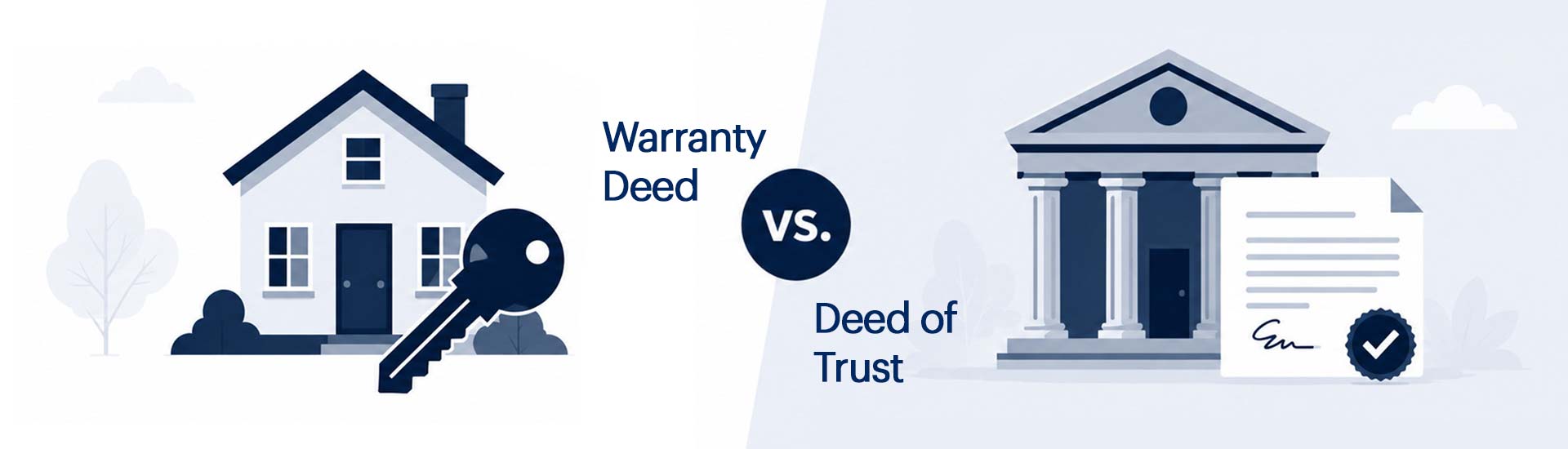
A warranty deed transfers property ownership from seller to buyer and guarantees clear title. A deed of trust is a security instrument that pledges the property as collateral for a mortgage loan. In short: a warranty deed proves ownership, while a deed of trust protects the lender.
Table of Contents
Two documents. Two very different jobs. Yet confusing them can delay closings, create title defects, and expose lenders to risk.
A warranty deed proves who owns a property. A deed of trust secures the loan used to buy it. One is about ownership. The other is about debt. Mixing them up can lead to title defects, funding delays, and disputes that surface years later.
For title companies, lenders, and underwriters, that difference is not academic. It shapes how you clear title, price risk, and close on time.
What Is a Warranty Deed?
A warranty deed is the document that transfers ownership of real property from a seller (the grantor) to a buyer (the grantee). It carries legal guarantees about the title.
When someone asks what a warranty deed is, the short answer is a promise. The grantor promises the title is clean, free of undisclosed liens, and that they have the legal right to sell.
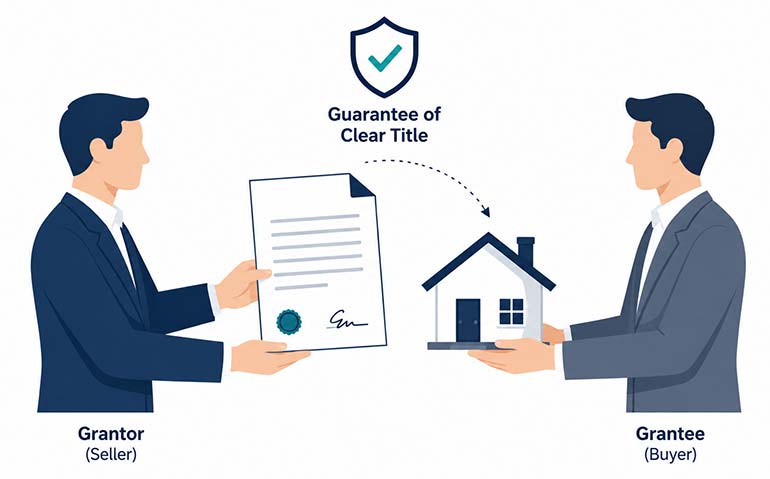
There are two common types:
- General warranty deed: Covers the entire history of the property. The grantor guarantees against all title defects, even ones that predate their ownership.
- Special warranty deed: Covers only the period the grantor owned the property. Common in commercial deals and REO sales.
If a title problem appears later, the grantee can pursue the grantor for damages. That protection is the whole point of the document.
Example
A buyer purchases a home in Texas. Three years on, an old contractor’s lien surfaces from a prior owner. Under a general warranty deed, the seller remains liable for that defect.
What Is a Deed of Trust?
A deed of trust is a security instrument. It does not transfer ownership to a buyer. Instead, it pledges the property as collateral for a loan, held until the debt is paid.
This is where the “property deed vs deed of trust” confusion starts. A deed of trust is closer to a mortgage than to a warranty deed. It involves three parties, not two:
- Trustor: The borrower.
- Beneficiary: The lender.
- Trustee: A neutral third party (often a title company) who holds legal title until the loan is repaid.
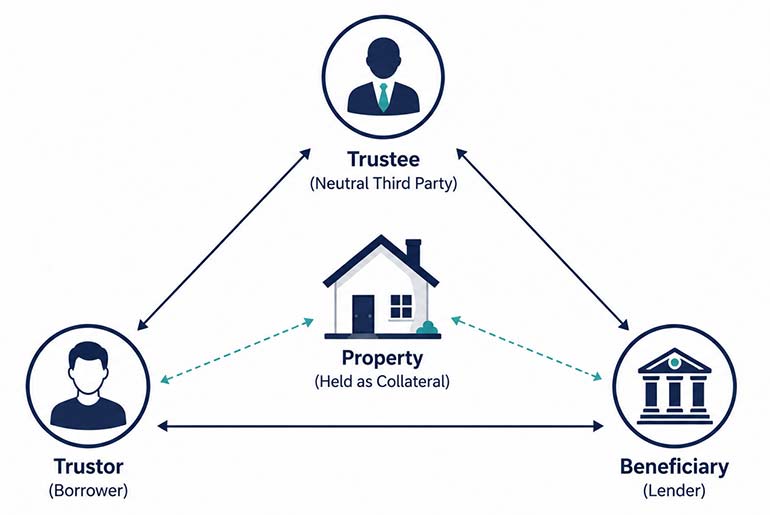
If the borrower defaults, the trustee can sell the property through a non-judicial foreclosure, which is usually faster than a court process. That speed is why lenders in many states prefer it. Accurately capturing these instruments is a core part of property deed processing, ensuring every lien and ownership detail is correctly recorded.
More than 30 U.S. states use deeds of trust. Others rely on traditional mortgages. Knowing which applies in your jurisdiction is basic underwriting hygiene.
Example
A borrower in California finances a purchase. The lender records a deed of trust. The title company acts as trustee. If payments stop, the trustee can foreclose without going to court first.
Key Differences at a Glance
Here is the core of the title vs lien documents question, side by side.
| Factor | Warranty Deed | Deed of Trust |
|---|---|---|
| Purpose | Transfers ownership | Secures a loan |
| Parties involved | Grantor, grantee | Trustor, beneficiary, trustee |
| Ownership vs security | Conveys ownership | Creates a security interest |
| Risk level | Protects the buyer | Protects the lender |
| Usage scenario | Sale or transfer of property | Financing a purchase |
Read that table again if you take nothing else away. Ownership on one side. Security on the other. This is the heart of real estate ownership vs security instrument.
When Is Each Used?
Both documents often appear in the same transaction. They just do different work at different moments.
Warranty deed is used when ownership changes hands. A sale, a gift, an estate transfer, or moving property into an LLC. Anywhere clean title needs to pass to a new owner.
Deed of trust is used when a loan funds the deal. The moment a lender is involved in a deed-of-trust state, the instrument gets recorded to secure repayment.
Picture a standard financed home purchase. The seller signs a warranty deed conveying the home to the buyer. The buyer signs a deed of trust pledging that same home to the lender. Same closing table, two documents, two jobs.
Cash purchases skip the deed of trust entirely. No loan, no security instrument. That is one quick clue for anyone reviewing a file.
Warranty Deed vs Deed of Trust in Title Workflow
In a typical title search workflow, both documents serve distinct checkpoints:
- Warranty deed → Confirms ownership chain
- Deed of trust → Identifies financial encumbrances
Title professionals use both to ensure:
- Ownership is valid
- Liens are identified
- Title is marketable
Missing either side of this equation creates risk. Ownership without lien clarity is incomplete. Lien review without ownership validation is unreliable.
Legal and Financial Implications
Get these wrong and the consequences are real.
A warranty deed exposes the grantor to future claims. Sign one, and you are on the hook for title defects, sometimes for the entire history of the property. That is a serious, ongoing liability.
A deed of trust exposes the borrower to foreclosure. Default triggers the trustee’s power of sale. In non-judicial states, that can move quickly, with limited court oversight.
For lenders and investors, the priority of these instruments matters enormously. Recording order determines who gets paid first in a default. A missed lien or a misrecorded deed can flip that priority and cost real money.
This is exactly where accurate title research earns its keep, especially when supported by professional title search services that ensure no lien or ownership gap is missed.
Common Mistakes to Avoid
The errors we see most often are not exotic. They are ordinary and expensive.
- Confusing the two documents. Treating a deed of trust like proof of ownership. It is not. It secures debt.
- Assuming a warranty deed means zero risk. A general warranty deed still relies on the grantor’s solvency. A promise is only as good as the person making it.
- Ignoring state rules. Deed-of-trust states and mortgage states foreclose differently. Applying the wrong framework creates real exposure.
- Skipping the chain of title. Missing a prior transfer or an unreleased lien breaks the chain and stalls closing.
- Poor document indexing. Misfiled or mislabeled records make later searches slow and error-prone. Structured AI document processing helps prevent this.
Why This Matters for Title Search
Every title search hinges on reading these documents correctly. The warranty deed tells you who owns the property and how clean that ownership is. The deed of trust tells you what debts are attached to it.
Miss the distinction and your title report is wrong. You might clear a property that still carries an active lien. Or flag a defect that does not exist. Both cost time and credibility.
Title professionals live in this detail. Underwriters price risk on it. Lenders fund on it. When the underlying document review is accurate, everything downstream moves faster and safer.
Volume makes it harder. A busy title operation processes thousands of documents a month. Consistency and speed at that scale are difficult to maintain in-house without straining your team.
How HabileData Can Help
This is the kind of work that rewards precision and scale, and it is what we do.
HabileData supports title companies, lenders & proptech firms with property data solutions, including title search, document processing, and data intelligence.
Our teams extract, classify, and verify deed data with a sharp eye on the ownership-versus-security distinction that trips up so many files. That means cleaner title reports and fewer surprises after closing.
Whether you need full title search support, high-volume document indexing, or structured data from unstructured records, we help you clear more files, faster, without adding headcount.
If document backlogs or accuracy concerns are slowing your closings, that is a solvable problem.
Conclusion
The difference comes down to one line: a warranty deed proves ownership, and a deed of trust secures a loan. One protects the buyer. The other protects the lender.
Getting that distinction right is the foundation of clean title work. Getting it wrong is how defects, delays, and disputes creep in.
If you want that accuracy at scale, without stretching your team thin, HabileData is built for exactly this. Talk to us about title search and document processing that keeps your closings on schedule.
FAQs
A warranty deed transfers property ownership and guarantees a clear title to the buyer. A deed of trust, on the other hand, is a security instrument used by lenders to secure a loan against the property. One establishes ownership, while the other creates a lien.
No, a deed of trust does not prove ownership. It only shows that the property is being used as collateral for a loan. Ownership is established through documents like a warranty deed, which legally transfers property rights from the seller to the buyer.
Yes, both documents are commonly used in the same transaction. The warranty deed transfers ownership from seller to buyer, while the deed of trust secures the lender’s interest in the property. Together, they reflect both ownership and financing in real estate transactions.
If a defect appears in the title after the transfer, the grantor may be legally responsible, especially under a general warranty deed. The buyer can pursue compensation for losses caused by undisclosed liens or title issues, making proper title verification essential before closing.
Lenders often prefer deeds of trust because they allow non-judicial foreclosure, which is faster and less costly than court-based foreclosure processes. This efficiency reduces risk and recovery time, making deeds of trust a preferred security instrument in many U.S. states.
Understanding the difference is critical for accurate title search and reporting. A warranty deed confirms ownership history, while a deed of trust reveals active liens. Misinterpreting either can lead to incorrect title reports, delayed closings, or financial risk for lenders and buyers.
Struggling with title accuracy or document overload?



Jatin Patel is a Senior Manager with over 23 years of expertise in real estate documentation and legal publishing. He specializes in scaling major client accounts and driving operational excellence through strategic business transformation. By leveraging automation and deep domain knowledge, Jatin optimizes processes to enhance accuracy and efficiency. He is recognized for delivering measurable outcomes through technology adoption and a client-centric approach to execution. 🔗Connect with Jatin on LinkedIn